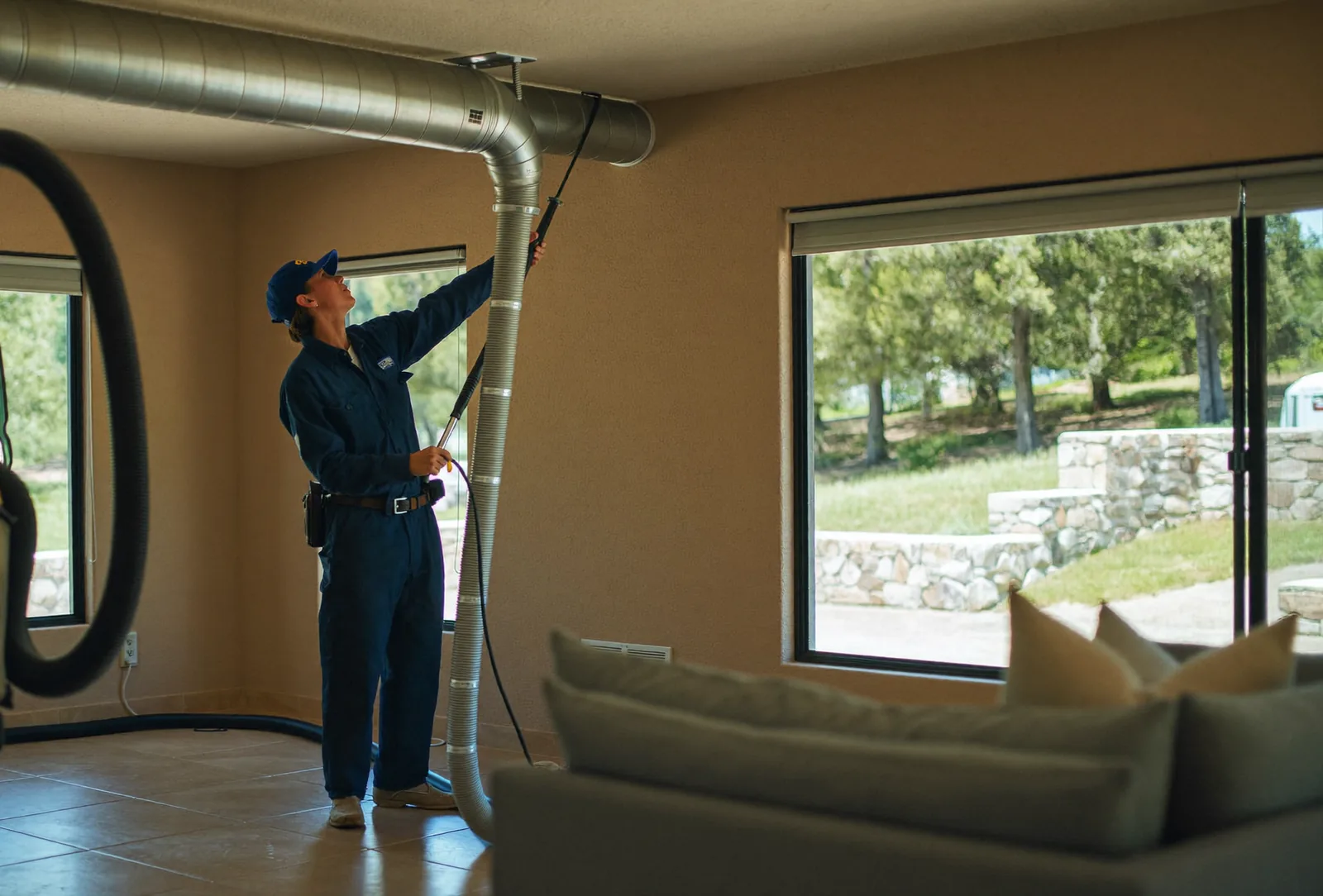
Air duct cleaning in San Antonio means pulling years of settled dust, pollen and attic debris out of the ductwork that feeds every room of your home. We work on houses across Bexar County — 1970s ranches on the South Side, Stone Oak two-stories with dual systems, and everything between — and the outcome is the same: a system that stops handing the same dust back to you every cycle.
What Does Air Duct Cleaning Involve?
The method that matters is called source removal. The ductwork is put under negative pressure with a high-volume vacuum, every register is sealed, and then each run is agitated with rotating brushes or compressed-air whips. Because the system is already pulling one direction, everything that comes loose travels into the vacuum and not into your living room.
A complete job also covers the equipment: the return plenum, the blower wheel, and the evaporator coil. Skipping those is the shortcut that makes a cheap quote possible, and it is also why some homes smell exactly the same the day after a cleaning.
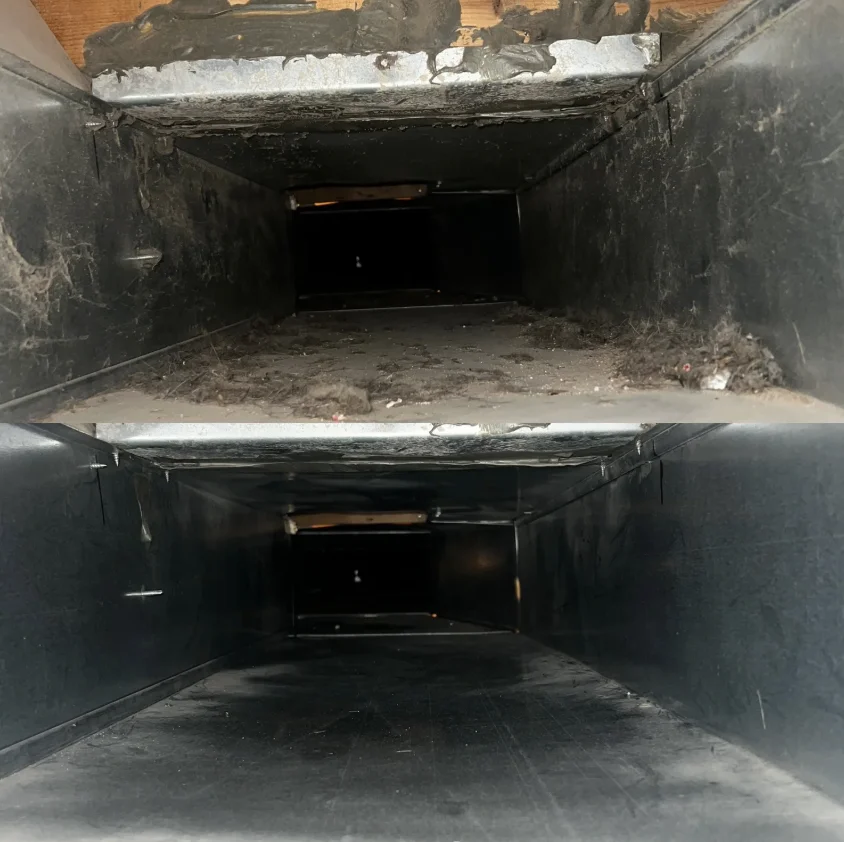
We finish with a walkthrough at the same access points we opened at the start, so you are comparing the same runs rather than taking our word for it.
When Do You Need Air Duct Cleaning?
- Dust puffs out of a register when the system kicks on
- You dust on Saturday and the film is back by Monday
- The home has just been through a remodel, a re-roof, or new insulation
- You bought the house and have no maintenance history at all
- Someone in the home is hit hard by mountain cedar in winter or oak in spring
- There is evidence of rodents, or you have seen torn flex duct in the attic
If none of those describe your house and the system is newer, you can usually wait. We will say so on the walkthrough.
Why Do San Antonio Ducts Get So Dirty?
Three local conditions stack on top of ordinary household dust. First, the Edwards Plateau limestone under this city produces a fine pale dust that works into everything during dry stretches, and the construction boom along the 1604 corridor keeps adding to it. Second, humidity here sits high for most of the year, which makes that dust clump and stick to duct walls instead of staying loose enough to reach a filter.
Third, and biggest: almost all residential ductwork in San Antonio is insulated flex duct suspended in an attic. Attic heat degrades the outer jacket, foot traffic during roof and insulation work crushes runs against trusses, and rodents open the inner liner. Once a return run is torn, the system pulls unfiltered attic air — insulation fibers, dust, whatever else is up there — straight into the airstream.
What Affects the Cost of Air Duct Cleaning in San Antonio?
- How many vents. The single biggest driver. Nine supply vents and twenty-two are different jobs.
- One system or two. A second air handler means a second coil and blower — nearly double the labor.
- Attic access. Decked and walkable is fast. Low clearance with blown-in insulation over the runs is slow and careful.
- What is in there. Ordinary dust clears quickly; construction debris, heavy pet hair, rodent nesting or microbial growth add time and materials.
- Bundled work. Adding a dryer vent or coil cleaning to the same visit is cheaper than a second trip.
We give you one firm number after a short walkthrough rather than a phone guess that changes once the tech is in the attic. Be wary of any ad quoting a whole house before anyone has seen it.
Duct Cleaning vs. Duct Replacement: Which Do You Need?
Cleaning is the answer when the ductwork is intact and the problem is what has accumulated inside it. That covers the large majority of homes.
Replacement becomes the honest recommendation when the duct itself has failed: inner liner torn along a run, insulation collapsed and soaked, sections crushed flat behind a truss, or a system so old the flex has gone brittle. Cleaning a duct in that condition is money spent on something that will leak attic air again next week. When we see it, we tell you and we do not charge you to clean around it. We are not an HVAC install company, so there is nothing in it for us either way.
Not sure which camp you are in? Send us a couple of attic photos and we will give you a read before anyone drives out.