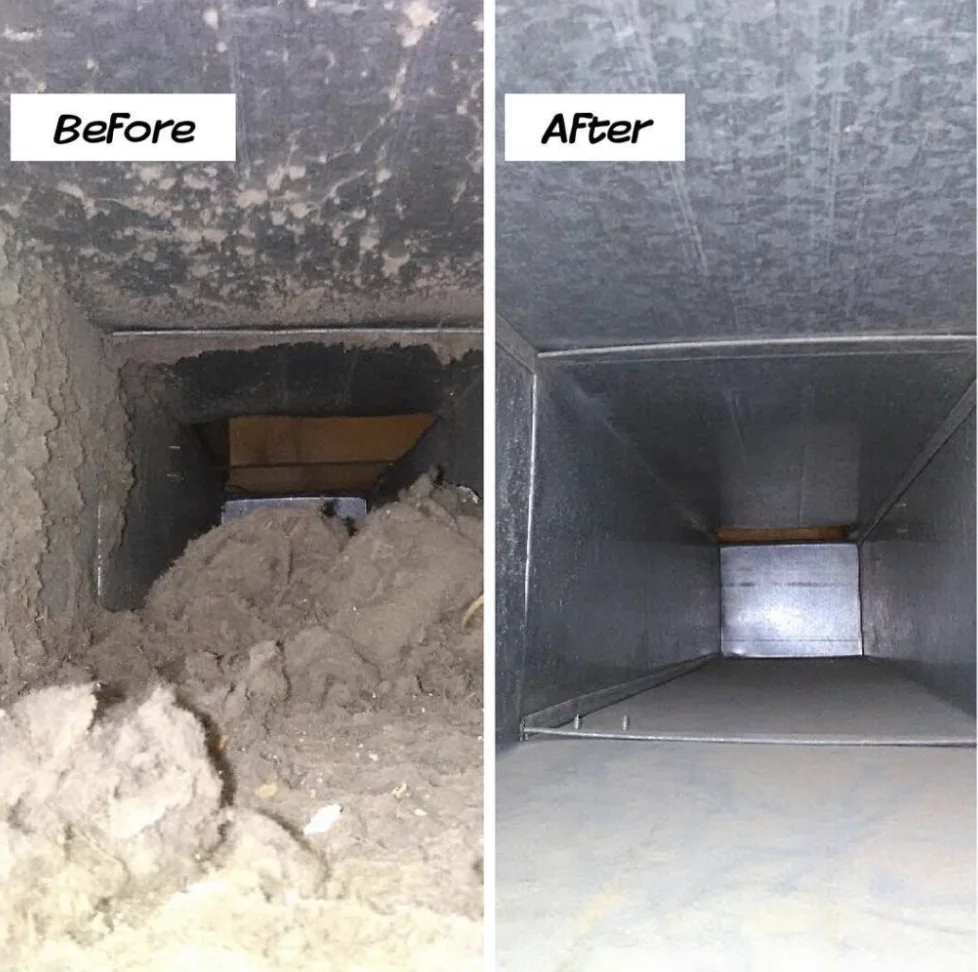
Duct mold removal in San Antonio addresses microbial growth on the interior surfaces of your ductwork and air handler — the reason a house can smell musty the moment the AC kicks on. We remove it physically, then apply an EPA-registered antimicrobial rated for HVAC surfaces. We work homes across San Antonio and Bexar County, where year-round humidity makes this a far more common call than it would be in a dry climate.
What Does Duct Mold Removal Involve?
The order matters more than the products. First we contain and clean: the system is sealed and put under negative pressure, and every affected surface is physically agitated and vacuumed out. Growth is organic matter sitting on a layer of dust, and it has to be removed, not coated.
Once the surfaces are genuinely clean, we apply an antimicrobial that is EPA-registered for use on HVAC components — not a general household disinfectant. We treat the duct interiors, the coil, the drain pan and the plenum.
Then we look for the moisture source, because that is what actually prevents a repeat: a plugged condensate drain, a coil running wet, duct insulation soaked from a roof leak, or uninsulated runs sweating in a hot attic. If we cannot find and name the source, the growth returns, and we would rather tell you that than take your money twice.
When Do You Need Duct Mold Removal?
- A musty or earthy smell hits the moment the AC starts and fades as it runs
- You can see dark speckling on register grilles or just inside the boots
- Allergy-type symptoms that are worse indoors than outdoors
- You have had a roof leak, a plumbing leak, or an overflowing condensate pan
- The home sat vacant and closed up through a San Antonio summer
- Duct insulation feels damp, or you have seen standing water in the drain pan
Why Does Mold Grow in San Antonio Air Ducts?
Growth needs three things: spores, organic material and moisture. Spores are in every building on earth and organic material is just settled dust, so moisture is the only variable — and San Antonio supplies plenty of it. Humidity here sits high for most of the year, which means the cold surfaces inside a running AC system stay damp.
The usual trouble spots are predictable. Evaporator coils are wet by design, so a coil with a slow drain stays wet between cycles. Condensate pans hold water when the line clogs with biofilm. Flex duct running through a 130-degree attic sweats where the insulation has thinned or been crushed. And a system that is oversized cools the house fast, shuts off, and never runs long enough to pull the humidity down — which is why a too-big AC can leave a house cold and clammy at the same time.
What Affects the Cost of Duct Mold Removal in San Antonio?
- How far it has spread. A coil and plenum are contained. Growth through the whole duct system is a much larger job.
- What the duct is made of. Sheet metal cleans and treats well. Porous fiberglass duct board that has been colonized often cannot be salvaged.
- The moisture source. A clogged drain line is a quick fix. Sweating attic runs or a roof leak mean repair work before treatment makes sense.
- System size. Vent count and number of air handlers, same as any duct job.
- Bundling. Treatment inside a full duct cleaning is far less than booking it separately.
We give you one firm number after a short walkthrough rather than a phone guess that changes once the tech is in the attic. Be wary of any ad quoting a whole house before anyone has seen it.
Cleaning Alone vs. Cleaning Plus Sanitizing: Which Do You Need?
Cleaning alone is right for the ordinary case: dust, pollen and debris, no smell, nothing visible on the grilles. That is most homes, and adding a chemical treatment to it buys you nothing.
Cleaning plus sanitizing is right when there is confirmed growth or a persistent musty odor, after water damage, or when a household member has a real sensitivity. The treatment only works on surfaces that have already been cleaned, which is why we never sell sanitizing as a standalone service.
Be skeptical of anyone offering to fog or spray your ducts without cleaning them first. It hides the smell for a couple of weeks and leaves the growth in place. If your San Antonio home has a smell you cannot place, tell us what you are noticing and we will tell you which of these two you actually need.